Keynote Speakers
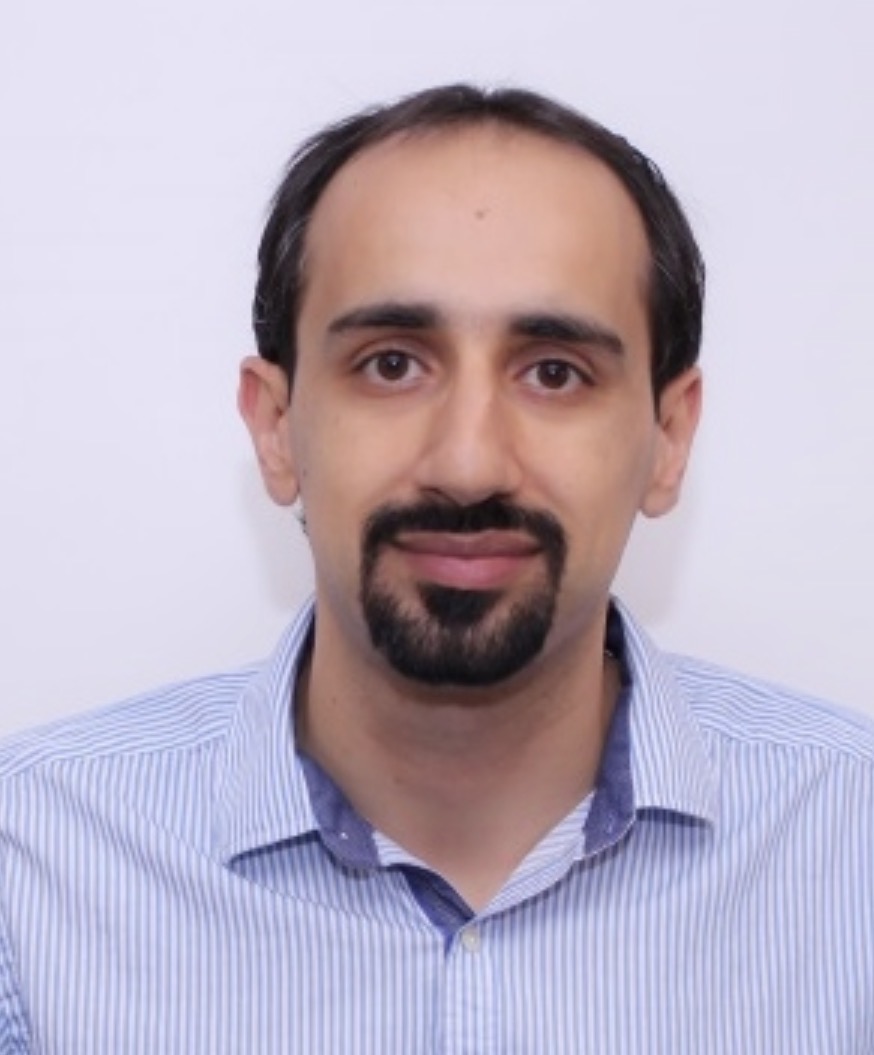
Dr. Herodotos Herodotou
Cyprus University of Technology
Title
Hyper-Distributed Intelligence in the Cloud-Edge-IoT Continuum
Abstract
Modern AI-driven applications increasingly demand seamless operation across the cloud-edge-IoT continuum to achieve ultra-low latency, localized data processing, and adaptive scalability. However, managing these hyper-distributed environments poses critical challenges for model and data engineering, particularly regarding resource heterogeneity, decentralized decision-making, dynamic scheduling, and zero-trust security. Traditional cloud-native orchestrators like Kubernetes lack the native capabilities to manage dynamic, non-containerized devices or enable autonomous, swarm-based coordination across diverse computing nodes. This presentation introduces the HYPER-AI platform, designed to overcome the limits of centralized control. Built as a Kubernetes-native extension, HYPER-AI establishes a unified abstraction layer that homogenizes compute, storage, and network resources across the entire continuum. To automate complex orchestration, HYPER-AI leverages autonomous, self-organizing computing swarms alongside a zero-trust security architecture backed by distributed ledger technology. A central highlight of this talk is the Distributed and Adaptive Resource Optimization (DARO) framework, an auction-based Multi-Agent Reinforcement Learning (MARL) system built for intelligent task scheduling. DARO enables dynamic, decentralized resource allocation that balances conflicting objectives of performance, monetary cost, energy efficiency, and data locality. Attendees will gain insight into the model engineering principles, platform design, and technical updates behind HYPER-AI, demonstrating how decentralized intelligence and multi-agent systems drive the next generation of resilient, context-aware compute continuum.
Bio
Dr. Herodotos Herodotou is an Associate Professor in the Department of Electrical Engineering and Computer Science and Engineering at the Cyprus University of Technology, leading the Data Intensive Computing Research Lab. He received his Ph.D. in Computer Science from Duke University. His Ph.D. dissertation received the ACM SIGMOD Jim Gray Doctoral Dissertation Award Honorable Mention as well as the Outstanding Ph.D. Dissertation Award in Computer Science at Duke. Before joining CUT, he held research positions at Microsoft Research, Yahoo! Labs, and Aster Data, as well as software engineering positions at Microsoft and RWD Technologies. His research interests include large-scale Data Processing Systems, Database Systems, and Cloud Computing. In particular, his work focuses on ease of use, manageability, and automated tuning of both centralized and distributed data-intensive computing systems. In addition, he is interested in applying techniques from database and dataflow systems to other domains, such as maritime informatics, smart tourism, social computing, and environmental informatics. His research work has been published in several top scientific conferences and journals (e.g., PVLDB, SIGMOD, SoCC, CIDR), as well as in four books and two book chapters.

Prof. Marjan Mernik
University of Maribor
Title
From Grammar Inference to Semantic Inference of Domain-Specific Languages
Abstract
This talk describes research work on Semantic Inference, which can be regarded as an extension of Grammar Inference. The main task of Grammar Inference is to induce a grammatical structure from a set of positive samples (programs), which can sometimes also be accompanied by a set of negative samples. Successfully applying Grammar Inference can result only in identifying the correct syntax of a language. With Semantic Inference, a further step is realised: towards inducing language semantics. When syntax and semantics can be inferred, a complete compiler/interpreter can be generated solely from samples. Moreover, from a formal specification, many other tools (editor, compiler, debugger, test engine) can be generated automatically. To successfully solve the problem of Semantic Inference, the Genetic Programming approach was employed, a population-based evolutionary search. The first results were encouraging, and we were able to infer S-attributed, L-attributed and Absolutely Non-circular Attribute Grammars for small Domain-Specific Languages.
Bio
Marjan Mernik received the MSc and PhD degrees in Computer Science from the University of Maribor in 1994 and 1998, respectively. He is currently a professor at the University of Maribor, Faculty of Electrical Engineering and Computer Science. From 2007 to 2017, he was a visiting professor in the Department of Computer and Information Sciences at the University of Alabama at Birmingham. His research interests include programming languages, domain-specific (modelling) languages, grammar and semantic inference, and evolutionary computations. He is the Editor-in-Chief of the Journal of Computer Languages, as well as an Associate Editor of the Applied Soft Computing Journal and Swarm and Evolutionary Computation Journal. He has been named a Highly Cited Researcher for the years 2017 and 2018. More information about his work is available at https://lpm.feri.um.si/en/members/mernik/.